When to See a Gynecologist
Red flags, annual checkups, what to bring to your appointment
Routine Care: What and When
First gynecological visit should happen between ages 13 and 15 (usually just a conversation, not an exam).
Pap smears are recommended starting at age 21. From 21-29, every 3 years. From 30-65, every 3 years (Pap), every 5 years (HPV test), or both every 5 years.
An annual well-woman visit is still recommended even in years without a Pap smear.
Red Flags: When to Make an Appointment Now
Period changes: significantly heavier, more painful, or longer periods. Cycles shorter than 21 or longer than 35 days. Missing 3+ periods in a row. Bleeding between periods or after sex.
Pain: severe cramps unresponsive to OTC relief. Pelvic pain outside your period. Pain during intercourse.
Other: unusual vaginal discharge, vulvar itching or burning, breast lumps or nipple discharge.
How to Prepare for Your Appointment
Bring your Naya tracking data — cycle length history, flow patterns, symptom logs, and irregularities. Write down your questions and concerns beforehand.
Be prepared to discuss: menstrual history, sexual health, family history (ovarian cancer, breast cancer, endometriosis, PCOS, early menopause), and medications.
Remember: you have the right to ask questions, request explanations, and feel comfortable. If you don't feel heard by your provider, it's okay to find a new one.
Continue reading
- What Is a Normal Cycle Anyway?— 5 min read
- How Stress Affects Your Cycle— 5 min read
- Birth Control and Your Cycle— 6 min read
Quick Tip
Export your Naya cycle data before your appointment — your tracking history gives your doctor more useful information than your memory alone.
This content is for educational purposes only and is not a substitute for professional medical advice, diagnosis, or treatment. Always consult your healthcare provider with questions about your health.
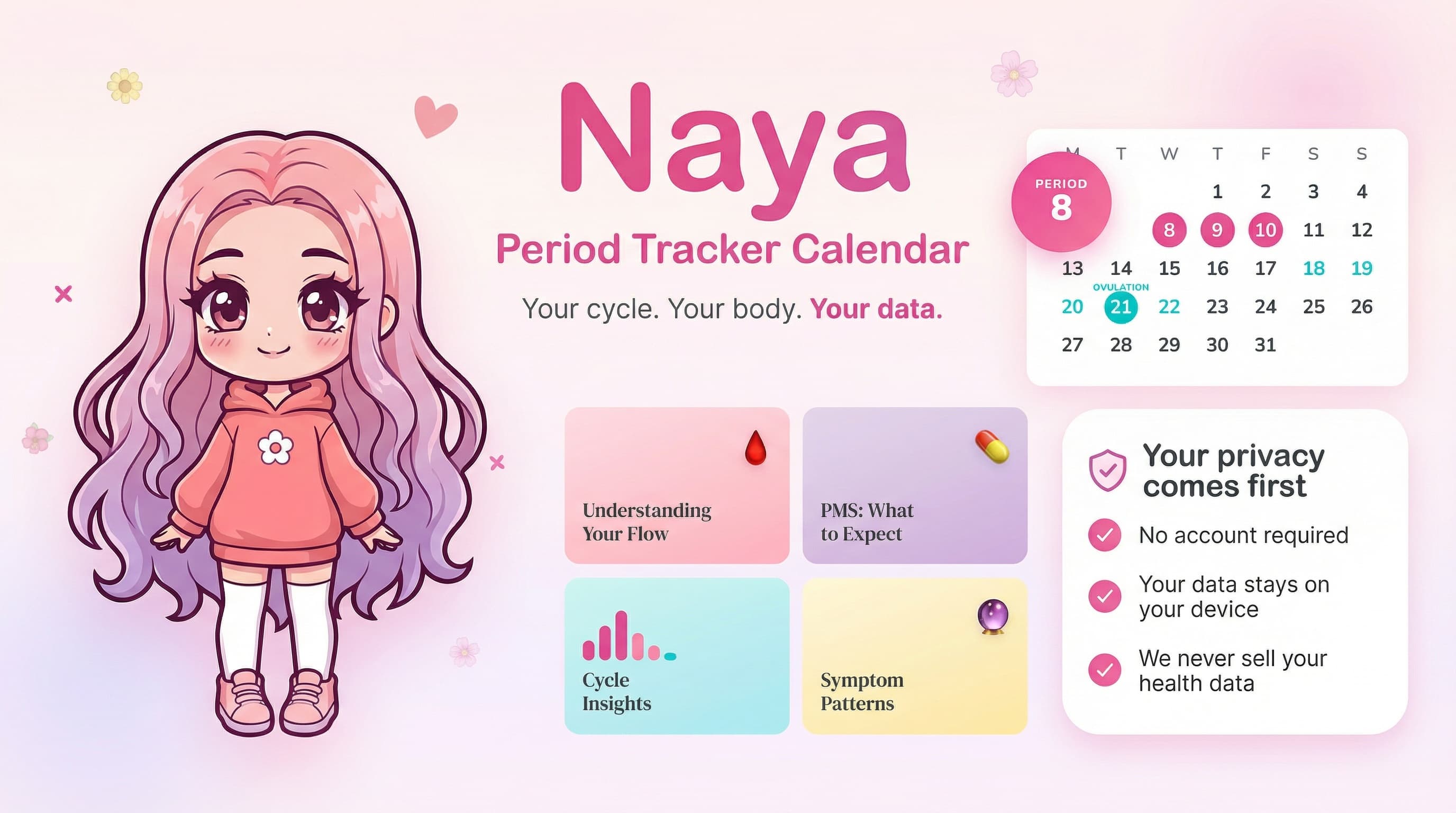
Track your cycle with Naya
Read phase-specific articles like this one inside the app. Free to download, no account required.